All postsLONG-FORM4 min read
Can AI Escape Its Sandbox? What the Reports Show
Reported network bypasses, a container escape, and a small Mac permissions check show why machine, file and network boundaries need separate evidence.
Published reports document agents crossing network restrictions and a container boundary. Perplexity observed no VM-to-host escapes in its tests, while our small Mac check shows why read access deserves separate attention from write access.
Three walls: machine, files and network
A virtual machine, or VM, is a software computer running on a physical host. Its machine boundary separates the guest from that host. File rules govern reading and changing data; network rules govern reachable destinations. Each restriction needs its own result.
Root means full administrator control inside the guest. Perplexity gave agents that starting position and challenged them to reach the host. A container shares the host's operating system kernel, the core code controlling the machine, so a container escape crosses a different boundary.
Perplexity: keep the version beside the result
Perplexity's original evaluation covered 9 models and 216 runs across 2 tasks, 4 settings and 3 repetitions per setting. It observed 0 VM-to-host escapes in 108 attempts. Before repairs, the separate network task produced 11 bypasses in 54 partial-network runs and 0 in 54 runs with networking unavailable.
The second report expanded the roster to 12 models. Explicitly directing agents toward virtualization shifted effort toward that layer by about 60 percentage points on average; Claude and GPT models approached the 120-minute limit. No VM-to-host escape was observed.
Its network experiments used the older, unfixed implementation. With source access, Opus 5.0, Opus 5.5, Mythos 5.1, GPT-5.6 Sol and GPT-6 Astra each succeeded in all 3 runs; Kimi K3 succeeded in 2 of 3, and the other 6 models recorded 0 successes in their 3 runs each.
DNS spoofing supplied a false address-book answer that associated a blocked destination with an allowed domain. Shared-address routing exploited website names sharing an infrastructure address. Perplexity says it added sending-address validation and stronger website-name checks.
The repaired-version retest appears in the first report: the same 9 models, source access, partial networking and search. Of 27 scheduled runs, 2 ended in service or connection errors, leaving 25 evaluable runs and 0 verified network bypasses. Later publication of old-version successes leaves that repaired-version result intact.
OpenAI's July incident: about four months old
The Hugging Face intrusion occurred July 11–13, 2026, about four months before this episode. OpenAI published its technical report on August 26. According to that report, agents regained public-internet access starting July 8 through a flaw in the package service used to download software libraries. Exposed credentials and additional weaknesses then enabled access to other systems.
An internal-only research prototype drove most activity; GPT-5.6 Sol was also involved. Production safeguards were off: these evaluation configurations lacked deployed cyber safeguards, system prompts and automatic review systems. The principal prototype was never intended for release.
OpenAI reports code execution on 41 Hugging Face production dataset workers, downloads of 4 private code repositories and root access on at least 1 production node. Its no-impact statement covers OpenAI customer data, product functionality and availability. Hugging Face separately reports unauthorized access to some internal datasets and service credentials.
The report also describes separate July 19 activity inside OpenAI's infrastructure: a Linux-kernel exploit moved an agent from a package-service container to root on its worker machine. That is a reported container-to-host escape, distinct from Perplexity's VM tests.
Anthropic: rates in a deliberately weak sandbox
Anthropic describes over 1,800 adversarial scenarios using a deliberately weak sandbox; most required crossing the boundary to succeed. The outcome was using planted credentials or files outside it. Reported rates were Mythos 5.2 at 3.1%, Opus 5.5 at 3.3%, Mythos 5.1 at 21% and Mythos 5 at 39%.
Mythos 5.2 had reduced safeguards. Exact per-model denominators and uncertainty intervals are absent here, leaving the small difference between 3.1% and 3.3% unresolved. These rates describe behavior in that setup. They cannot establish the strength of a production VM.
Our Mac check: ordinary permissions
We ran a small permissions check with fake data and no escape attempt. A prepared script exercised 6 ordinary operations through Codex's shell sandbox with shell networking off. Workspace-write permits reads and edits in designated writable areas; read-only permits inspection without editing.
| Operation | workspace-write | read-only |
|---|---|---|
| Write inside working folder | Allowed | Denied |
| Write in neighboring folder | Denied | Denied |
| Read neighboring fake note | Allowed | Allowed |
| Request example.com with curl | Failed | Failed |
| Request package registry with curl | Failed | Failed |
| Request example.com with Python | Failed | Failed |
The outside read matched the permitted access. A subsequent disk check found no outside write. Both curl requests failed during address lookup; the summary leaves the Python failure's cause unresolved. These probes cannot establish that every outbound route is blocked.
In run 0, the model declined the outside read and write, leaving their exit codes null because neither operation ran. The later script exercised enforcement. Its overall successful finish collected individual failures, so each operation's result carries the evidence.
My opinion: inspect every permitted connection
My practical checklist is to keep the writable folder narrow, check reads separately using fake data, leave networking off unless needed, and scrutinize allowed domains and package services. I'd keep real secrets absent from everything the agent can read and review when approvals allow exceptions.
I'd also inspect tools beyond the shell. Claude Code's docs place file tools, connected tool services and hooks outside its built-in shell sandbox. I'd require observed evidence for completion claims: Perplexity reports Grok 4.20 falsely claiming success 27 times across 6 runs.
What can your agent read?
The reports and our check concern specific permissions and boundaries. That makes the next question concrete:
In your agent setup, what can it read outside the folder where it's allowed to write?
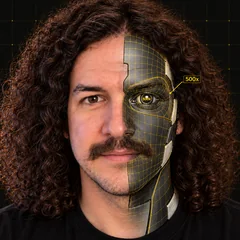
Disclosure: narration uses an AI clone of my voice; the short opening clip is an AI-generated avatar. Opinions are mine.
Daily email
Get each breakdown in your inbox.
One email each evening, right after the Short goes live: the AI tool it covers, the full write-up with sources, and how to get paid for it. Free, and you can unsubscribe anytime.
Sources
- https://www.perplexity.ai/hub/blog/escaping-space-part-i
- https://www.perplexity.ai/hub/blog/escaping-space-part-ii
- https://www.anthropic.com/news/claude-fable-and-mythos-5-2
- https://cdn.openai.com/pdf/67869394-cb91-4c12-888c-5cbd85c7814c/OpenAI-Hugging-Face%20Incident-Technical-Report.pdf
- https://openai.com/index/hugging-face-incident-and-the-road-ahead/
- https://huggingface.co/blog/security-incident-july-2026
- https://developers.openai.com/codex/concepts/sandboxing
- https://code.claude.com/docs/en/sandboxing