All postsLONG-FORM6 min read
AI Usage Limits Keep Changing. What Breaks If Yours Do?
OpenAI is pooling ChatGPT and Codex usage from December, Grok Bot's limits were cut over cost, and Anthropic's new usage policy takes effect Nov 12. I mapped the 12 outside services my AI video pipeline depends on, measured what one episode uses, and unplugged two of them on purpose.
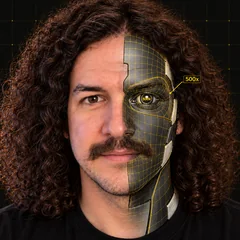
This channel is made by a pipeline of AI tools, and most of them belong to someone else. In the last few weeks, the rules moved under it. OpenAI said ChatGPT and Codex will share one usage allowance starting in December. Elon Musk said serving Grok Bot had become too expensive, after users said their usage ran out fast. And Anthropic's new rules for using Claude take effect on November 12. So I mapped every outside service my pipeline touches, measured what one episode uses, and ran two drills: switch off something I pay for, and see what still ships.
Three companies, three changes
OpenAI. Its help center page "Understanding ChatGPT and Codex usage limits" (updated around Nov 1, 2026) says: "Starting in December, Plus, Pro, and Business plans' usage allowance will be shared across ChatGPT and Codex." Usage "will be measured in tokens," how much you use "will depend on the model you choose and the task," and "Instant chat will not draw from your usage." The page gives no exact date in December and no size for the shared allowance. OpenAI says it expects most users won't wait for resets more often than they do now.
The same week, the dial moved the other way for some people: on Oct 29, Tibo (Codex and ChatGPT at OpenAI) posted that usage limits were doubling for the Pro 100/200/500 tiers and Business Premium, effective that day.
Grok Bot. On Nov 1, a user asked Elon Musk on X for a Grok Bot reset because "lots of people say their usage ran out really fast this week." His reply: "The cost of serving Grok Bot was unsustainably high relative to revenue." I couldn't find published numbers for the new limits. I don't use Grok; it's here because it shows how fast a plan's limits can change.
Anthropic. Anthropic posted its 2026 Usage Policy update on Oct 8; it takes effect Nov 12. Anthropic says most of the changes clarify existing rules. One new section, "Do Not Engage in Deceptive Campaigns or Artificial Activity," matters for automated channels (more below).
The map: 12 outside services
Making a video takes six steps:
| Step | Service | Where it runs |
|---|---|---|
| Script, research, scene code, checks | Claude Code (Anthropic) | Cloud |
| Voice (a clone of my own voice) | ElevenLabs | Cloud |
| Twin opener (lip-synced clip of me) | Tein | Cloud |
| Thumbnail pictures | Codex on my ChatGPT plan | Cloud |
| Picture render | HyperFrames (package from npm, pinned to 0.8.206) | This Mac |
| Audio mix and master | ffmpeg | This Mac |
Four of the six steps need someone else's servers. The release adds seven more services: YouTube, Telegram (I approve or reject each episode from my phone), GitHub (this blog), Skool, Spotify, Substack and Medium. That's twelve, counting npm. What runs locally: the video tools, the audio mix, the lip-sync checks and the captions.
What one episode uses
From my own logs, for my most recent episode:
- Voice: 9,255 characters, read once.
- Twin: one 9-second clip, $0.86.
- Thumbnails: three pictures, about 65,600 tokens by the Codex CLI's own count (15,925, 27,602 and 22,073).
- Claude Code: not logged anywhere in the pipeline. That was finding number one. Finding number two: the Shorts don't keep a voice log either; the only record is the history page at the voice company.
From December, my Codex use, thumbnails included, shares one pool with my ChatGPT use. OpenAI hasn't said exactly how image jobs count, and the pool size isn't published, so I can't tell you how many thumbnails will fit.
Sorted by what happens if a service changed its rules tomorrow:
- Stops the episode: Claude Code (it's the producer), ElevenLabs (this channel uses my voice only), YouTube (the release).
- Slows it down: the twin (it had a backup on paper) and the thumbnails (no backup written down).
- Barely matters: the render tool (version pinned, a copy already on this Mac).
The drill
Drill 1: the twin service is gone. I took an older twin clip that had already passed my likeness checks and gave it a new line (an opener I had already voiced). Then I ran LatentSync 1.6, a free, open lip-sync model, on this Mac (M5 Max, 20 steps, guidance 2.0, other work running). It redraws the lower face to match the new audio. I scored the results with SyncNet, a standard lip-sync checker (real talking heads usually land between 6 and 9; my bar for using a clip is 5):
| Clip (same new line) | SyncNet confidence |
|---|---|
| Before: old mouth, new audio | 0.97 |
| Local LatentSync, free | 8.69 |
| Cloud take from Tein (raw), $0.86 | 6.92 (raw take, no shift) |
The local pass scored highest, which surprised me, so here's the catch: LatentSync is trained with SyncNet supervision (its paper and README say so), so this test favors it; it isn't a neutral judge. The local pass took 26 minutes and cost nothing; the cloud clip came back in under five minutes for $0.86. And the redrawn face comes out softer and a little warmer in color, so every frame still gets checked by eye.
Drill 2: no new AI pictures. The thumbnail's words and layout were already plain web code on this Mac; only the background picture came from Codex. With a picture of me I already had in its place, the thumbnail rendered in about three seconds. Plainer, and it still ships.
The brain. I didn't drill Claude Code for this episode. Two episodes ago I tested a free model running on this Mac against Claude on jobs from this pipeline. On a blind script test judged by another company's AI, the best version of the local model scored 38 out of 50; two Claude models scored 44 and 45. One sample each, so it's a snapshot. In my view, a local model can cover small jobs, and the whole show still needs Claude.
The voice has no drill. If ElevenLabs changed the rules tomorrow, the backup is me at a microphone.
Reading the new rules
Anthropic's new section bans fake personas and accounts ("bots that claim to be human"), distributing content through networks of fake or independent-looking outlets "to hide that it comes from a common source," and seeding the places search engines and AI tools pull answers from with "content that misrepresents its origin." An automated channel lives close to that section, so here's my practice: one channel under my real name; every upload marked as altered or synthetic content in YouTube's settings; every description says AI was used, and how; the blog, the Skool post and the podcast all point back to the same source. This is my opinion, and I'm no lawyer: when the rules tighten around automation, clear disclosure is the cheapest protection I know of.
The checklist
- Map: every outside service, which step it powers, which plan it bills.
- Log: usage per job, in characters, tokens and dollars. I'm adding the Claude log first.
- Backup: one per step, and run it once for real.
- Pin: fixed versions, so a tool can't change under you.
- Keep: scripts, voice takes, renders and thumbnails on your own disk.
- Read: the change pages. OpenAI's help center and Anthropic's policy page both show a date for the latest version; a monthly calendar reminder is enough.
My takeaway, as opinion: know what you rent, keep your own files, and test the backup before you need it.
What's the one AI tool your work would stall without, and what's your backup? Tell me in the comments on the video.
Daily email
Get each breakdown in your inbox.
One email each evening, right after the Short goes live: the AI tool it covers, the full write-up with sources, and how to get paid for it. Free, and you can unsubscribe anytime.
Sources
- OpenAI Help Center, Understanding ChatGPT and Codex usage limits: https://help.openai.com/en/articles/20001625-understanding-chatgpt-and-codex-usage-limits
- Tibo (Codex & ChatGPT at OpenAI) on X, Oct 29: https://x.com/thsottiaux/status/2115850175868727621
- Elon Musk on X, Nov 1: https://x.com/elonmusk/status/2116992258520064397 (the question: https://x.com/DogecoinNorway/status/2116986414110007446)
- Anthropic, 2026 Usage Policy update (Oct 8): https://www.anthropic.com/news/2026-usage-policy-update
- Anthropic Usage Policy (effective Nov 12, 2026): https://www.anthropic.com/legal/aup
- LatentSync (ByteDance), trained with SyncNet supervision: https://github.com/bytedance/LatentSync
- My own logs and drill files (voice ledger, Tein ledger, Codex CLI logs, LatentSync run, SyncNet scores). No keys, paths or account details are shown.
- Product names appear as text only; 500x Engineer is not affiliated with or endorsed by any of them. Opinions are mine, and I'm no lawyer.