All postsSHORT3 min read
One Developer Rebuilt 7 Adobe Apps With Claude
ArtCraft rebuilt seven Adobe apps in Rust with Claude writing much of the code, and REA lets agents map how any app works. What it means for you.
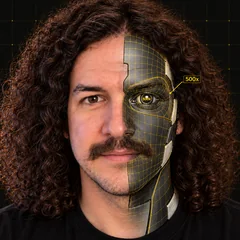
One developer rebuilt seven Adobe apps with Claude. Photoshop, Premiere, Lightroom and four more, as free, open-source apps written in Rust. At the same time, a toolkit called REA lets your coding agent take apart an app and explain exactly how it works. Copying how software behaves just got a lot cheaper.
What happened
ArtCraft. VisuaLounge reported on October 8, 2026, that Brandon Thomas, a single developer and fifteen-year industry veteran who founded ArtCraft in 2025, released seven apps that reimplement Adobe products:
- PhotoCraft (Photoshop)
- VectorCraft (Illustrator)
- FilmCraft (Premiere)
- LightCraft (Lightroom CC)
- PrintCraft (Acrobat)
- EffectCraft (After Effects)
- DesignCraft (InDesign)
They're written in Rust and released as free and open source, "with Anthropic's Claude Opus 5.5 writing much of the code," according to the article. The PhotoCraft repo describes itself as "an open-source, clean-room reimplementation of Adobe Photoshop, rebuilt in pure Rust," carries an MIT or Apache-2.0 license badge, and is marked early alpha. Thomas himself said on Hacker News the apps are "not anywhere close to ready."
The legal framing matters. Thomas calls it a clean-room reimplementation: no Adobe code, no copied assets, functionality rebuilt from the outside. VisuaLounge notes that addresses copyright, and that Adobe holds thousands of patents, so "whether ArtCraft crosses any of those lines is unresolved."
REA. REA (github.com/morluto/rea) describes itself as a way to "reverse engineer anything with agents, from app behavior down to native binaries." It works with Claude Code, Codex, Cursor, Gemini CLI and Grok Build, and it can analyze native binaries, JavaScript and Electron apps, .NET assemblies, Android APKs, websites, firmware and more. It's MIT licensed and had about 386,000 stars when I checked. It's been around since April 2026, and it kept shipping through October, with release rea-agents-6.8.0 on October 25.
REA's README is explicit about the rules: it's for "lawful research, education, interoperability, software preservation, and analysis of software you own."
Why it matters for builders
For decades, the slowest and most expensive part of replacing software was understanding the old system. Reading unfamiliar code, figuring out what every screen does, finding where the data lives. ArtCraft shows how far one developer with an AI coding agent can push a rebuild, even if the results are early alpha. REA shows that an agent can now do a big share of the "how does this thing work" step.
Put together, mapping and rebuilding an app that does a focused job is now within reach of one engineer. That changes who can take on a rewrite, and how small the first engagement can be.
The legal lines haven't moved, though. Work only on software you own or are authorized to examine, rebuild clean, and let a lawyer answer the license and patent questions.
Try it in 15 minutes
- Make sure you have a supported Node.js version (REA lists 22.x, 24.x or 26.x minimums in its README).
- Set REA up for your agent:
npx rea-agents setup. Install it only from the official sources the README names: the morluto/rea repo, rea.tools, or the rea-agents npm package. - Pick an Electron or JavaScript app you own or wrote yourself.
- Run the analysis from the README:
npx -y rea-agents@latest analyze-javascript-application /absolute/path/to/app --json. - Ask Claude Code to turn the output into a one-page map: every screen, every feature, where the data is stored, and anything that looks fragile.
- Read the map and check it against what you know about the app. That's the deliverable you'd hand a client, and now you know how long it takes.
Here's how you get paid
My opinion: businesses near you run old tools nobody can update. A dental office's scheduling app. A trucking company's dispatch tool written by a contractor who moved away. An old database that runs a warehouse. The vendor is gone, the owner is scared of it, and nobody wants to quote a rewrite.
Sell a legacy app rescue in three phases, one at a time:
- Discovery map. A fixed-price written map of the old app: what it does, every screen and report, where the data lives, and the risks. The agent does the heavy lifting here.
- Rebuild. Rebuild only the features they actually use, on a modern, boring stack with tests, and run old and new side by side until the outputs match.
- Care plan. Hosting, backups and small changes every month.
Get written confirmation that the client owns or is licensed to examine the software before you start.
Daily email
Get each breakdown in your inbox.
One email each evening, right after the Short goes live: the AI tool it covers, the full write-up with sources, and how to get paid for it. Free, and you can unsubscribe anytime.
Sources
- VisuaLounge, "ArtCraft: seven Adobe apps rebuilt in Rust" (October 8, 2026): https://visualounge.com/dispatch/artcraft-seven-adobe-apps-rebuilt-in-rust/
- PhotoCraft on GitHub: https://github.com/storytold/photocraft
- REA on GitHub: https://github.com/morluto/rea