All postsROUNDUP3 min read
Best of the Week: OpenCode Browse's Agent Steering Warning and 4 More AI Tools
This week's five topics: OpenCode Browse, Google's Elephant-Goldfish Model, Qwen4-Max, Claude Code verification, and Windows agent reporting.
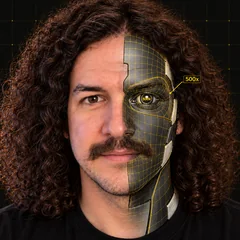
This week, I'm looking at who reviews the spec, who verifies the change, and what a page or an operating system can see when I use a coding agent. These are the five Shorts I'd send an engineer checking an agent's work, comparing task costs, or deciding what it can reach.
OpenCode Browse: Pages May Try to Steer Your Coding Agent
Browse, from Anomaly, the company behind OpenCode, pairs an MCP server with a Chromium extension so OpenCode, Claude Code, Codex, Cursor, and other MCP clients can use your real browser with its tabs, logins, and extensions. Its README says pages and emails may try to steer the agent, and describes site limits and read-only tabs as guardrails: readOnly refuses clicks, typing, and navigation, while eval and webmcp can still run JavaScript that changes the page. If you're connecting an agent to your browser, I'd read the README's Security section before choosing which pages to open; its advice for pages you don't want the agent to read is “don't open them in browse.”
Full breakdown with sources: 500xengineer.com/blog/opencode-browse
Google AI Coding: The Elephant-Goldfish Model
Google's Elephant-Goldfish Model plugin uses a long, context-rich Elephant design session with a No Code rule, followed by stateless Goldfish reviews that see the design document without the conversation, so the spec has to stand alone. Google's post describes three checks: explain it back, attack it, and decide whether implementation can begin; the plugin installs in Claude Code, Codex, and Antigravity. If you're reviewing an agent's implementation plan, I'd try those checks, keeping the README's limits in view: this is a pre-1.0 plugin, it isn't an officially supported Google product, and review does not replace tests or human judgment.
Full breakdown with sources: 500xengineer.com/blog/elephant-goldfish-egm
Qwen4-Max in Claude Code: Cheaper Tokens, Bigger Bill?
Alibaba launched Qwen4-Max on November 16 and publishes a Claude Code setup guide, with token prices of $1.50 input and $4.50 output per million tokens versus Claude Opus 5.5's $4 and $20. On the Artificial Analysis Intelligence Index, Qwen4-Max at xhigh effort scored 43 at $3.27 per task, while Opus 5.5 at medium effort scored 48 at $2.45; Artificial Analysis also called Qwen4-Max very verbose, with 127 million tokens generated versus a 78.6 million median. If you're choosing a model for Claude Code, I'd measure cost per finished task on your own workload: this is one benchmark with different effort settings.
Full breakdown with sources: 500xengineer.com/blog/qwen4-max-claude-code
Claude Code Verify Skill: Who Checks Claude?
In Addy Osmani's November 16 post published by Anthropic, the Claude Code team says Claude writes and reviews about 90% of the team's own code, a team figure without independent measurement. The team's advice is “Verification means running the change”: create a verify skill in the repository's .claude/skills/ folder that describes how to run the app end to end. If you're handing implementation to Claude, I'd make that verification path explicit; the post says Claude brings in a human after three failed rounds and a change can't modify the checks judging it.
Full breakdown with sources: 500xengineer.com/blog/claude-code-verify-skill
Windows 11, Claude Code & Codex: Researcher Finds Optional Reporting
Researcher Xusheng Li reports that Windows 11's MissionControlAggregator.dll checks coding-agent file names including claude.exe, codex.exe, copilot.exe, and cursor.exe, with a report labelled optional diagnostic data queued for Microsoft when optional diagnostics are allowed; copying cmd.exe to codex.exe set the Codex bit in his test. Li found no prompt text or source code in the report, and his baseline VM had the feature disabled by image default, so the finding doesn't establish that it's active on every PC; no Microsoft statement on the finding was found as of November 17. If you use coding agents on Windows and want to stop optional uploads, go to Settings, Privacy and security, Diagnostics and feedback, and turn off Send optional diagnostic data.
Full breakdown with sources: 500xengineer.com/blog/windows-agent-telemetry
Daily email
Get each breakdown in your inbox.
One email each evening, right after the Short goes live: the AI tool it covers, the full write-up with sources, and how to get paid for it. Free, and you can unsubscribe anytime.
Sources
- OpenCode Browse: Pages May Try to Steer Your Coding Agent: https://www.500xengineer.com/blog/opencode-browse/
- Google AI Coding: The Elephant-Goldfish Model: https://www.500xengineer.com/blog/elephant-goldfish-egm/
- Qwen4-Max in Claude Code: Cheaper Tokens, Bigger Bill?: https://www.500xengineer.com/blog/qwen4-max-claude-code/
- Claude Code Verify Skill: Who Checks Claude?: https://www.500xengineer.com/blog/claude-code-verify-skill/
- Windows 11 Coding-Agent Reporting: What a Researcher Found: https://www.500xengineer.com/blog/windows-agent-telemetry/