All postsSHORT3 min read
An AI coding model in a 6 GB file: what did Bonsai lose?
PrismML's about 6 GB file for a coding model you run yourself: its own test scores, the terminal-task gap and the file and runtime limits.
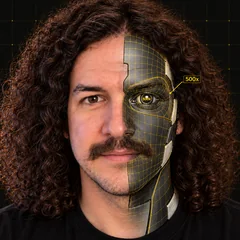
A coding model in an about 6 GB file you run yourself. What did it lose? PrismML says Bonsai keeps 90% of the full model's score across three agentic coding benchmarks. The terminal-task gap and runtime requirements deserve a look before you install it.
What PrismML released on Nov 24, 2026
PrismML released Ternary Bonsai 2.5 27B, a compressed version of Alibaba's Qwen3.8 27B, with downloadable weights under Apache 2.0. Its weights take three values: −1, 0 and +1. PrismML's demo exposes an OpenAI-compatible API with structured tool calls.
The weights are a free download. You supply the hardware. We haven't tested the model, and every benchmark result here comes from PrismML's own tests.
The size: check which file you're downloading
PrismML lists the full-precision model at 53.8 GB and describes Bonsai as about nine times smaller. Its 5.93 GB figure refers specifically to the PTQ1_0 packing.
The Hugging Face file list gives these download sizes:
- PTQ1_0: 5.99 GB. The smallest packing.
- PQ2_0: 7.25 GB. Also needs PrismML's runtime fork.
- Q2_0: 7.67 GB. The option for recent stock llama.cpp builds.
Those are file sizes. Running the model takes more memory, and long context takes more again. The model card cites one community user's RTX 3080 10 GB report: about 9.5 GB total GPU memory before adding -np 1, about 7.8 GB afterward, including desktop usage. That's one user's report. Memory depends on build, context size and settings.
PrismML's own scores and how it ran them
In PrismML's own tests, SWE-bench Verified scores are 75.6 for Bonsai 2.5, 80.6 for the full model and 60.8 for Bonsai 2. Across three agentic coding benchmarks, PrismML reports 90% of the full model's score, up from 63% for Bonsai 2.
Tool calling is a separate result. Across five tool-calling benchmarks, PrismML reports an average of 77.2 against 77.7 for the full model. That average doesn't describe coding performance.
The whitepaper describes one shared evaluation setup and serving path, thinking mode with reasoning effort xhigh, and one attempt per task, or pass@1. All models were served with vLLM on NVIDIA H100 GPUs. SWE-bench Verified used all 500 tasks, mini-SWE-agent and a 262,144-token context. These scores come from that setup.
What it lost, and what's unmeasured
In PrismML's own tests, Terminal-Bench 2.1 scores are 60.1 against 70.8 for the full model. The whitepaper says:
Terminal-Bench 2.1 is still the agentic benchmark where we are furthest from FP16, and even our longest evaluations are bounded, single-task episodes.
It also says:
We have not yet measured workloads that run for hours across many context windows, such as machine-learning engineering (MLE-bench), long-running autonomous operation (Vending-Bench), and harder multi-language repository work (SWE-bench Pro).
PrismML provides no measured result here for jobs spanning hours and many context windows. The model also thinks by default at xhigh reasoning effort, which costs time.
Pick the file and runtime together
Check PrismML's model card before downloading. PTQ1_0 and PQ2_0 need the kernels in PrismML's llama.cpp fork. Stock llama.cpp rejects those types.
For stock llama.cpp, choose Q2_0 and release b11556 or newer. Check bundled engines too. The model card warns:
Older stock builds load
Q2_0without any warning and produce garbage
A file loading successfully isn't enough to establish that the runtime works correctly. The model card and setup repository are the starting points for choosing the build.
The builder angle: my opinion, no income guaranteed
My take: sell private AI setups to clients whose code or files should stay on their own machine. Install the model there, test it on their real work, and check every tool it connects to before they rely on it.
The model runs on their machine. Connected tools can still send data out, so local installation alone doesn't settle the data question. Make the tool check part of the service.
Daily email
Get each breakdown in your inbox.
One email each evening, right after the Short goes live: the AI tool it covers, the full write-up with sources, and how to get paid for it. Free, and you can unsubscribe anytime.